 Sheet Music Max is a site for those who wants to access popular sheet music easily,
letting them download the sheet music for free for trial purposes.
It's completely free to download and try the listed sheet music, but you have to delete the files after 24 hours of trial.
Don't forget, if you like the piece of music you have just learned playing,
treat the artist with respect, and go buy the original sheet music.
Sheet Music Max is a site for those who wants to access popular sheet music easily,
letting them download the sheet music for free for trial purposes.
It's completely free to download and try the listed sheet music, but you have to delete the files after 24 hours of trial.
Don't forget, if you like the piece of music you have just learned playing,
treat the artist with respect, and go buy the original sheet music.
Piano Sheet Music
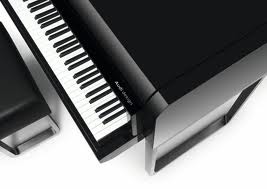 "Music was my refuge. I could crawl into the space between the notes and curl my back to loneliness." Maya Angelou
Bach
Johann Sebastian Bach (31 March 1685 – 28 July 1750) was a German composer and organist whose sacred and secular works for choir, orchestra, and solo instruments drew together the strands of the Baroque period and brought it to its ultimate maturity. Although he introduced no new forms, he enriched the prevailing German style with a robust contrapuntal technique, an unrivalled control of harmonic and motivic organisation in composition for diverse musical forces, and the adaptation of rhythms and textures from abroad, particularly Italy and France.
Revered for their intellectual depth and technical and artistic beauty, Bach's works include the Brandenburg concertos; the Goldberg Variations; the English Suites, French Suites, Partitas, and Well-Tempered Clavier; the Mass in B Minor; the St. Matthew Passion; the St. John Passion; The Musical Offering; The Art of Fugue; the Sonatas and Partitas for violin solo; the Cello Suites; more than 200 surviving cantatas; and a similar number of organ works, including the celebrated Toccata and Fugue in D Minor.
While Bach's fame as an organist was great during his lifetime, he was not particularly well-known as a composer. His adherence to Baroque forms and contrapuntal style was considered "old-fashioned" by his contemporaries, especially late in his career when the musical fashion tended towards Rococo and later Classical styles. A revival of interest and performances of his music began early in the 19th century, and he is now widely considered to be one of the greatest composers in the Western tradition.
Revered for their intellectual depth and technical and artistic beauty, Bach's works include the Brandenburg concertos; the Goldberg Variations; the English Suites, French Suites, Partitas, and Well-Tempered Clavier; the Mass in B Minor; the St. Matthew Passion; the St. John Passion; The Musical Offering; The Art of Fugue; the Sonatas and Partitas for violin solo; the Cello Suites; more than 200 surviving cantatas; and a similar number of organ works, including the celebrated Toccata and Fugue in D Minor.
While Bach's fame as an organist was great during his lifetime, he was not particularly well-known as a composer. His adherence to Baroque forms and contrapuntal style was considered "old-fashioned" by his contemporaries, especially late in his career when the musical fashion tended towards Rococo and later Classical styles. A revival of interest and performances of his music began early in the 19th century, and he is now widely considered to be one of the greatest composers in the Western tradition.
Music theory
Music theory is the study of the practices and possibilities of music. The Oxford Companion to Music describes three interrelated uses of the term "music theory"
Liszt
Franz Liszt (October 22, 1811 – July 31, 1886) was a Hungarian composer, virtuoso pianist and teacher.
Liszt became renowned throughout Europe for his great skill as a performer; to this day, many consider him to have been the greatest pianist in history. He was also an important and influential composer, a notable piano teacher, a conductor who contributed significantly to the modern development of the art, and a benefactor to other composers and performers, notably Richard Wagner and Hector Berlioz.
As a composer, Liszt was one of the most prominent representatives of the "Neudeutsche Schule" ("New German School"). He left behind a huge and diverse oeuvre, in which he influenced his forward-looking contemporaries and anticipated some 20th-century ideas and trends. Some of his most notable contributions were the invention of the symphonic poem, developing the concept of thematic transformation as part of his experiments in musical form and making radical departures in harmony.
Liszt has most frequently been credited to have been the first pianist who gave concerts with programs consisting only of solo pieces. An example is a concert he gave on March 9, 1839, at the Palazzo Poli in Rome. Since Liszt could not find singers who — following the usual habit of the time — should have completed the program, he played four numbers all alone.
Liszt was a prolific composer. Most of his music is for the piano and much of it requires formidable technique.In his most famous and virtuosic works, he is the archetypal Romantic composer. Liszt pioneered the technique of thematic transformation, a method of development which was related to both the existing variation technique and to the new use of the Leitmotif by Richard Wagner. Liszt's piano works are usually divided into two classes. On the one hand, there are "original works", and on the other hand "transcriptions", "paraphrases" or "fantasies" on works by other composers.
Liszt became renowned throughout Europe for his great skill as a performer; to this day, many consider him to have been the greatest pianist in history. He was also an important and influential composer, a notable piano teacher, a conductor who contributed significantly to the modern development of the art, and a benefactor to other composers and performers, notably Richard Wagner and Hector Berlioz.
As a composer, Liszt was one of the most prominent representatives of the "Neudeutsche Schule" ("New German School"). He left behind a huge and diverse oeuvre, in which he influenced his forward-looking contemporaries and anticipated some 20th-century ideas and trends. Some of his most notable contributions were the invention of the symphonic poem, developing the concept of thematic transformation as part of his experiments in musical form and making radical departures in harmony.
Liszt has most frequently been credited to have been the first pianist who gave concerts with programs consisting only of solo pieces. An example is a concert he gave on March 9, 1839, at the Palazzo Poli in Rome. Since Liszt could not find singers who — following the usual habit of the time — should have completed the program, he played four numbers all alone.
Liszt was a prolific composer. Most of his music is for the piano and much of it requires formidable technique.In his most famous and virtuosic works, he is the archetypal Romantic composer. Liszt pioneered the technique of thematic transformation, a method of development which was related to both the existing variation technique and to the new use of the Leitmotif by Richard Wagner. Liszt's piano works are usually divided into two classes. On the one hand, there are "original works", and on the other hand "transcriptions", "paraphrases" or "fantasies" on works by other composers.
Gruber, Franz Xaver
Franz Xaver Gruber (25 November 1787 – 7 June 1863), was an Austrian primary school teacher, church organist and composer in the village of Arnsdorf, who is best known for composing the music to "Stille Nacht" ("Silent Night").
Contents
1 Life
2 "Silent Night"
3 Family
4 References
5 External links
Life
Gruber was born on 25 November 1787 in the village of Hochburg-Ach, Upper Austria, the son of linen weavers, Josef and Maria Gruber. His given name was recorded in the baptismal record as "Conrad Xavier," but this was later changed to "Franz Xaver". The Hochburger schoolteacher Andreas Peterlechner gave him music lessons.
Gruber taught at the primary school in Arnsdorf
Portrait in the Silent Night Chapel in Oberndorf bei Salzburg
Silent Night
Choral version by United States Army Chorus
Problems playing this file? See media help.
Gruber worked as a weaver until the age of 18, then trained to become a schoolteacher. He completed his music education studying with the church organist of Burghausen, Georg Hartdobler. In 1807 Gruber became a schoolteacher in Arnsdorf. He also became the church caretaker and organist. In 1808 he married a widow, Maria Elisabeth Fischinger Engelsberger. They had two children, both of whom died young. After the death of his first wife in 1825, Gruber married a former student, Maria Breitfuss. They had ten children, four of whom survived to adulthood. In 1829 Gruber moved to Berndorf, and in later years to Hallein, Salzburg, where he was named choir director, singer and organist.
Maria Gruber died in childbirth in 1841. The following year he married Katherine Wimmer.
Contents
1 Life
2 "Silent Night"
3 Family
4 References
5 External links
Life
Gruber was born on 25 November 1787 in the village of Hochburg-Ach, Upper Austria, the son of linen weavers, Josef and Maria Gruber. His given name was recorded in the baptismal record as "Conrad Xavier," but this was later changed to "Franz Xaver". The Hochburger schoolteacher Andreas Peterlechner gave him music lessons.
Gruber taught at the primary school in Arnsdorf
Portrait in the Silent Night Chapel in Oberndorf bei Salzburg
Silent Night
Choral version by United States Army Chorus
Problems playing this file? See media help.
Gruber worked as a weaver until the age of 18, then trained to become a schoolteacher. He completed his music education studying with the church organist of Burghausen, Georg Hartdobler. In 1807 Gruber became a schoolteacher in Arnsdorf. He also became the church caretaker and organist. In 1808 he married a widow, Maria Elisabeth Fischinger Engelsberger. They had two children, both of whom died young. After the death of his first wife in 1825, Gruber married a former student, Maria Breitfuss. They had ten children, four of whom survived to adulthood. In 1829 Gruber moved to Berndorf, and in later years to Hallein, Salzburg, where he was named choir director, singer and organist.
Maria Gruber died in childbirth in 1841. The following year he married Katherine Wimmer.
Nobuo Uematsu
Nobuo Uematsu (植松伸夫 Uematsu Nobuo?, born March 21, 1959) is a Japanese video game composer and musician, best known for scoring the majority of titles in the Final Fantasy series. He is regarded as one of the most famous and respected composers in the video game community. Uematsu is a self-taught musician; he began to play the piano at the age of eleven or twelve, with Elton John as his biggest influence.
Uematsu joined Square (later Square Enix) in 1985, where he met Final Fantasy creator Hironobu Sakaguchi. They have worked together on numerous titles, most notably the games in the Final Fantasy series. After nearly 20 years in the company, he left Square Enix in 2004 and founded his own company called Smile Please, as well as the music production company Dog Ear Records. He has since composed music as a freelancer for video games primarily developed by Square Enix and Sakaguchi's development studio Mistwalker.
A handful of soundtracks and arranged albums of Uematsu's game scores have been released. Pieces from his video game works have been performed in concerts worldwide, and numerous Final Fantasy concerts have also been held. He has worked with Grammy Award-winning conductor Arnie Roth on several of these concerts. In 2002, he formed a rock band with colleagues Kenichiro Fukui and Tsuyoshi Sekito called The Black Mages, in which Uematsu plays the keyboard. The band plays arranged rock versions of Uematsu's Final Fantasy compositions.
Uematsu joined Square (later Square Enix) in 1985, where he met Final Fantasy creator Hironobu Sakaguchi. They have worked together on numerous titles, most notably the games in the Final Fantasy series. After nearly 20 years in the company, he left Square Enix in 2004 and founded his own company called Smile Please, as well as the music production company Dog Ear Records. He has since composed music as a freelancer for video games primarily developed by Square Enix and Sakaguchi's development studio Mistwalker.
A handful of soundtracks and arranged albums of Uematsu's game scores have been released. Pieces from his video game works have been performed in concerts worldwide, and numerous Final Fantasy concerts have also been held. He has worked with Grammy Award-winning conductor Arnie Roth on several of these concerts. In 2002, he formed a rock band with colleagues Kenichiro Fukui and Tsuyoshi Sekito called The Black Mages, in which Uematsu plays the keyboard. The band plays arranged rock versions of Uematsu's Final Fantasy compositions.
Shiro Sagisu
Shirō Sagisu (鷺巣 詩郎, Sagisu Shirō, born August 29, 1957) is a Japanese music producer and composer. With a career spanning over 45 years (beginning in the late 1970s), he is best known for his works as a record producer for acts including various choir members Mike Wyzgowski, Misia, Satoshi Tomiie, and Ken Hirai. Sagisu has also worked as a film composer for several anime and films and is well known for his collaborations with Gainax, especially the soundtrack to Hideaki Anno's series Neon Genesis Evangelion. He won the Tokyo Anime Award for Best Music in 2010 for Evangelion: 2.0 You Can (Not) Advance.
Porno Graffitti
Porno Graffitti, also known as Porno, are a Japanese rock band from Onomichi, Hiroshima Prefecture, Japan. The band got their name from the album Pornograffitti by the band Extreme. They currently record under the SME Records label, and their agency is Amuse, Inc
Graham Nash
Graham William Nash OBE is a British-American singer-songwriter and musician. Nash is known for his light tenor voice and for his songwriting contributions as a member of the English pop/rock group the Hollies and the folk-rock supergroups Crosby, Stills & Nash and Crosby, Stills, Nash & Young.
Modest Mussorgsky
Modest Petrovich Mussorgsky (Russian: Модест Петрович Мусоргский, tr. Modést Petróvich Músorgskiy, IPA: ; 21 March 1839 – 28 March 1881) was a Russian composer, one of the group known as "The Five". He was an innovator of Russian music in the romantic period. He strove to achieve a uniquely Russian musical identity, often in deliberate defiance of the established conventions of Western music.
Walter Afanasieff
Walter Afanasieff, formerly nicknamed Baby Love in the 1980s, is a record producer, songwriter, composer and musician of Russian descent. He was a collaborator with Mariah Carey on her first six studio albums.
Queen
Queen were an English rock band formed in 1970 in London by guitarist Brian May, lead vocalist Freddie Mercury, and drummer Roger Taylor, with bass guitarist John Deacon completing the lineup the following year. While it is uncertain how many albums the band has sold, estimations range from 130 million to over 300 million albums worldwide.
The band is noted for their musical diversity, multi-layered arrangements, vocal harmonies, and incorporation of audience participation into their live performances. Their 1985 Live Aid performance was voted the best live rock performance of all time in an industry poll.
Queen had moderate success in the early 1970s, with the albums Queen and Queen II, but it was with the release of Sheer Heart Attack in 1974 and A Night at the Opera the following year that the band gained international success. They have released fifteen studio albums, five live albums, and numerous compilation albums. Eighteen of these have reached number one on charts around the world.
Following Mercury's death in 1991 and Deacon's retirement later in the decade, May and Taylor have performed infrequently under the Queen name. Since 2005 they have been collaborating with Paul Rodgers, under the moniker Queen + Paul Rodgers.
The band is noted for their musical diversity, multi-layered arrangements, vocal harmonies, and incorporation of audience participation into their live performances. Their 1985 Live Aid performance was voted the best live rock performance of all time in an industry poll.
Queen had moderate success in the early 1970s, with the albums Queen and Queen II, but it was with the release of Sheer Heart Attack in 1974 and A Night at the Opera the following year that the band gained international success. They have released fifteen studio albums, five live albums, and numerous compilation albums. Eighteen of these have reached number one on charts around the world.
Following Mercury's death in 1991 and Deacon's retirement later in the decade, May and Taylor have performed infrequently under the Queen name. Since 2005 they have been collaborating with Paul Rodgers, under the moniker Queen + Paul Rodgers.
Journey
Journey is an American rock band formed in San Francisco, California in 1973.
The band has gone through several phases since its inception by former members of Santana. The band's greatest commercial success came in the late 1970s through the early 1980s with a series of power ballads and songs such as "Don't Stop Believing", "Any Way You Want It", "Faithfully", "Open Arms", "Separate Ways", and "Wheel in the Sky."
Journey has been eligible for induction into the Rock & Roll Hall of Fame since 2000, but Gregg Rolie is currently the only member of Journey who has been inducted—as a member of parent band Santana. In 2009, Steve Perry, the band's best-known lead vocalist, will be eligible for induction as a solo artist.
Current members:
Neal Schon - Lead & rhythm guitars, backing vocals, lead vocals (1973-present)
Ross Valory - Bass, backing vocals, lead vocals (1973-1985, 1995-present)
Jonathan Cain - Piano, keyboards, harmonica, rhythm guitar, backing vocals, lead vocals (1980-present)
Deen Castronovo - Drums, percussion, backing vocals, lead vocals (1998-present)
Arnel Pineda - Lead vocals (2007-present)
The band has gone through several phases since its inception by former members of Santana. The band's greatest commercial success came in the late 1970s through the early 1980s with a series of power ballads and songs such as "Don't Stop Believing", "Any Way You Want It", "Faithfully", "Open Arms", "Separate Ways", and "Wheel in the Sky."
Journey has been eligible for induction into the Rock & Roll Hall of Fame since 2000, but Gregg Rolie is currently the only member of Journey who has been inducted—as a member of parent band Santana. In 2009, Steve Perry, the band's best-known lead vocalist, will be eligible for induction as a solo artist.
Current members:
Neal Schon - Lead & rhythm guitars, backing vocals, lead vocals (1973-present)
Ross Valory - Bass, backing vocals, lead vocals (1973-1985, 1995-present)
Jonathan Cain - Piano, keyboards, harmonica, rhythm guitar, backing vocals, lead vocals (1980-present)
Deen Castronovo - Drums, percussion, backing vocals, lead vocals (1998-present)
Arnel Pineda - Lead vocals (2007-present)
Antonio Carlos Jobim
Antonio Carlos Brasileiro de Almeida Jobim (January 25, 1927 in Rio de Janeiro – December 8, 1994 in New York City), also known as Tom Jobim, was a Grammy Award-winning Brazilian songwriter, composer, arranger, singer, and pianist/guitarist. A primary force behind the creation of the bossa nova style, Jobim is acknowledged as one of the most influential popular composers of the 20th century. His songs have been performed by many singers and instrumentalists within Brazil and internationally.
Fanny Mendelssohn
Fanny Mendelssohn was a German composer and pianist of the early Romantic era who was also known as Fanny Mendelssohn Bartholdy and, after her marriage, Fanny Hensel. In addition, she was referred to as Fanny Mendelssohn Hensel.
David Benoit
David Bryan Benoit (born August 18, 1953) is an American jazz pianist, composer and producer from Los Angeles, California. Benoit has charted over 25 albums since 1980, and has been nominated for three Grammy Awards. He is also music director for the Asia America Symphony Orchestra and the Asia America Youth Orchestra.
Traditional
Guiseppe Verdi
Giuseppe Fortunino Francesco Verdi (Italian pronunciation: ; 10 October 1813 – 27 January 1901) was an Italian Romantic composer, mainly of opera. He was one of the most influential composers of the 19th century. His works are frequently performed in opera houses throughout the world and, transcending the boundaries of the genre, some of his themes have long since taken root in popular culture - such as "La donna è mobile" from Rigoletto, "Va, pensiero" (The Chorus of the Hebrew Slaves) from Nabucco, "Libiamo ne' lieti calici" (The Drinking Song) from La traviata and the "Grand March" from Aida. Although his work was sometimes criticized for using a generally diatonic rather than a chromatic musical idiom and having a tendency toward melodrama, Verdi’s masterworks dominate the standard repertoire a century and a half after their composition.
Verdi's predecessors who influenced his music were Rossini, Bellini, Giacomo Meyerbeer and, most notably, Gaetano Donizetti and Saverio Mercadante. With the exception of Otello and Aida, he was free of Wagner's influence. Although respectful of Gounod, Verdi was careful not to learn anything from the Frenchman whom many of Verdi's contemporaries regarded as the greatest living composer. Some strains in Aida suggest at least a superficial familiarity with the works of the Russian composer Mikhail Glinka, whom Franz Liszt, after his tour of the Russian Empire as a pianist, popularized in Western Europe.
Throughout his career, Verdi rarely utilised the high C in his tenor arias, citing the fact that the opportunity to sing that particular note in front of an audience distracts the performer before and after the note appears. However, he did provide high Cs to Duprez in Jérusalem and to Tamberlick in the original version of La forza del destino. The high C often heard in the aria Di quella pira does not appear in Verdi's score.
Verdi's predecessors who influenced his music were Rossini, Bellini, Giacomo Meyerbeer and, most notably, Gaetano Donizetti and Saverio Mercadante. With the exception of Otello and Aida, he was free of Wagner's influence. Although respectful of Gounod, Verdi was careful not to learn anything from the Frenchman whom many of Verdi's contemporaries regarded as the greatest living composer. Some strains in Aida suggest at least a superficial familiarity with the works of the Russian composer Mikhail Glinka, whom Franz Liszt, after his tour of the Russian Empire as a pianist, popularized in Western Europe.
Throughout his career, Verdi rarely utilised the high C in his tenor arias, citing the fact that the opportunity to sing that particular note in front of an audience distracts the performer before and after the note appears. However, he did provide high Cs to Duprez in Jérusalem and to Tamberlick in the original version of La forza del destino. The high C often heard in the aria Di quella pira does not appear in Verdi's score.
Astor Piazzolla
Ástor Pantaleón Piazzolla (March 11, 1921 – July 4, 1992) was an Argentine tango composer and bandoneón player. His oeuvre revolutionized the traditional tango into a new style termed nuevo tango, incorporating elements from jazz and classical music. An excellent bandoneonist, he regularly performed his own compositions with different ensembles.
Piazzolla's nuevo tango was distinct from the traditional tango in its incorporation of elements of jazz, its use of extended harmonies and dissonance, its use of counterpoint, and its ventures into extended compositional forms. As Argentine psychoanalyst Carlos Kuri has pointed out, Piazzolla's fusion of tango with this wide range of other recognizable Western musical elements was so successful that it produced a new individual style transcending these influences. It is precisely this success, and individuality, that makes it hard to pin down where particular influences reside in his compositions, but some aspects are clear. The use of the passacaglia technique of a circulating bass line and harmonic sequence, invented and much used in 17th and 18th century baroque music but also central to the idea of jazz "changes", predominates in most of Piazzolla's mature compositions. Another clear reference to the baroque is the often complex and virtuosic counterpoint that sometimes follows strict fugal behavior but more often simply allows each performer in the group to assert his voice. A further technique that emphasises this sense of democracy and freedom among the musicians is improvisation that is borrowed from jazz in concept, but in practice involves a different vocabulary of scales and rhythms that stay within the parameters of the established tango sound-world. Pablo Ziegler has been particularly responsible for developing this aspect of the style both within Piazzolla's groups and since the composer's death.
Piazzolla's nuevo tango was distinct from the traditional tango in its incorporation of elements of jazz, its use of extended harmonies and dissonance, its use of counterpoint, and its ventures into extended compositional forms. As Argentine psychoanalyst Carlos Kuri has pointed out, Piazzolla's fusion of tango with this wide range of other recognizable Western musical elements was so successful that it produced a new individual style transcending these influences. It is precisely this success, and individuality, that makes it hard to pin down where particular influences reside in his compositions, but some aspects are clear. The use of the passacaglia technique of a circulating bass line and harmonic sequence, invented and much used in 17th and 18th century baroque music but also central to the idea of jazz "changes", predominates in most of Piazzolla's mature compositions. Another clear reference to the baroque is the often complex and virtuosic counterpoint that sometimes follows strict fugal behavior but more often simply allows each performer in the group to assert his voice. A further technique that emphasises this sense of democracy and freedom among the musicians is improvisation that is borrowed from jazz in concept, but in practice involves a different vocabulary of scales and rhythms that stay within the parameters of the established tango sound-world. Pablo Ziegler has been particularly responsible for developing this aspect of the style both within Piazzolla's groups and since the composer's death.
Ennio Morricone
Ennio Morricone, OMRI (born November 10, 1928), is an Italian composer and conductor. He has composed and arranged scores for more than 500 film and television productions. Morricone is considered as one of the most influential film composers since the late 1950s. He is well-known for his long-term collaborations with international acclaimed directors such as Sergio Leone, Brian De Palma, Barry Levinson, and Giuseppe Tornatore.
He wrote the characteristic film scores of Leone's Spaghetti Westerns A Fistful of Dollars (1964), For a Few Dollars More (1965), The Good, the Bad and the Ugly (1966), Once Upon a Time in the West (1968), The Great Silence (1968), and My Name Is Nobody (1973). In the 80s, Morricone composed the scores for John Carpenter's horror movie The Thing (1982), Leone's Once Upon a Time in America (1984), Roland Joffé's The Mission (1986), Brian De Palma's The Untouchables (1987) and Giuseppe Tornatore's Cinema Paradiso (1988).
His more recent compositions include the scores for Oliver Stone's U Turn (1997), Tornatore's The Legend of 1900 (1998) and Malèna (2000), Mission to Mars (2000) by Brian De Palma, Fateless (2005), and Baaria - La porta del vento (2009). Ennio Morricone has won two Grammy Awards, two Golden Globes and five Anthony Asquith Awards for Film Music by BAFTA in 1979–1992. He has been nominated for five Academy Awards for Best Music, Original Score in 1979–2001. Morricone received the Honorary Academy Award in 2007 "for his magnificent and multifaceted contributions to the art of film music". He was the second composer to receive this award after its introduction in 1928.
He wrote the characteristic film scores of Leone's Spaghetti Westerns A Fistful of Dollars (1964), For a Few Dollars More (1965), The Good, the Bad and the Ugly (1966), Once Upon a Time in the West (1968), The Great Silence (1968), and My Name Is Nobody (1973). In the 80s, Morricone composed the scores for John Carpenter's horror movie The Thing (1982), Leone's Once Upon a Time in America (1984), Roland Joffé's The Mission (1986), Brian De Palma's The Untouchables (1987) and Giuseppe Tornatore's Cinema Paradiso (1988).
His more recent compositions include the scores for Oliver Stone's U Turn (1997), Tornatore's The Legend of 1900 (1998) and Malèna (2000), Mission to Mars (2000) by Brian De Palma, Fateless (2005), and Baaria - La porta del vento (2009). Ennio Morricone has won two Grammy Awards, two Golden Globes and five Anthony Asquith Awards for Film Music by BAFTA in 1979–1992. He has been nominated for five Academy Awards for Best Music, Original Score in 1979–2001. Morricone received the Honorary Academy Award in 2007 "for his magnificent and multifaceted contributions to the art of film music". He was the second composer to receive this award after its introduction in 1928.
Jackson 5
The Jackson 5 (stylized as the Jackson 5ive), later known as the Jacksons, is an American pop band composed of members of the Jackson family. The group was founded in 1965 in Gary, Indiana, by brothers Jackie, Tito, and Jermaine, with younger brothers Marlon and Michael joining soon after. The Jackson 5 performed in talent shows and clubs on the Chitlin' Circuit, then signed with Steeltown Records in 1967 and released two singles. In 1968, they left Steeltown Records and signed with Motown, where they were first group to debut with four consecutive number one hits on the Billboard Hot 100 with the songs "I Want You Back", "ABC", "The Love You Save", and "I'll Be There". They also achieved 16 top-40 singles on the chart.
Professor Longhair
Henry Roeland "Roy" Byrd (December 19, 1918 – January 30, 1980), better known as Professor Longhair or "Fess" for short, was a New Orleans blues singer and pianist. He was active in two distinct periods, first in the heyday of early rhythm and blues and later in the resurgence of interest in traditional jazz after the founding of the New Orleans Jazz and Heritage Festival in 1970. His piano style has been described as "instantly recognizable, combining rumba, mambo, and calypso."
The music journalist Tony Russell (in his book The Blues: From Robert Johnson to Robert Cray) wrote that "The vivacious rhumba-rhythmed piano blues and choked singing typical of Fess were too weird to sell millions of records; he had to be content with siring musical offspring who were simple enough to manage that, like Fats Domino or Huey "Piano" Smith. But he is also acknowledged as a father figure by subtler players like Allen Toussaint and Dr. John."
The music journalist Tony Russell (in his book The Blues: From Robert Johnson to Robert Cray) wrote that "The vivacious rhumba-rhythmed piano blues and choked singing typical of Fess were too weird to sell millions of records; he had to be content with siring musical offspring who were simple enough to manage that, like Fats Domino or Huey "Piano" Smith. But he is also acknowledged as a father figure by subtler players like Allen Toussaint and Dr. John."
Gus Kahn
Gustav Gerson Kahn was an American lyricist who contributed a number of songs to the Great American Songbook, including "Pretty Baby", "Ain't We Got Fun?", "Carolina in the Morning", "Toot, Toot, ...
Ostrikov
Composer, pianist, software QA analyst, industrial electronics developer, programmer, auto mechanic… who else?
Joachim Kelecom
Joachim Kelecom compeser ,choral music ,Born: 16 August 1977.List of choral works
Felix Mendelssohn
Jakob Ludwig Felix Mendelssohn Bartholdy, born, and generally known in English-speaking countries, as Felix Mendelssohn (February 3, 1809 – November 4, 1847) was a German composer, pianist, organist and conductor of the early Romantic period.
The grandson of the philosopher Moses Mendelssohn, he was born into a notable Jewish family, although he himself was brought up initially without religion, and later as a Lutheran. He was recognized early as a musical prodigy, but his parents were cautious and did not seek to capitalise on his abilities. Indeed his father was disinclined to allow Felix to follow a musical career until it became clear that he intended to seriously dedicate himself to it.
Early success in Germany was followed by travel throughout Europe; Mendelssohn was particularly well received in England as a composer, conductor and soloist, and his ten visits there, during which many of his major works were premiered, form an important part of his adult career. His essentially conservative musical tastes however set him apart from many of his more adventurous musical contemporaries such as Liszt, Wagner and Berlioz. The Conservatory he founded at Leipzig became a bastion of this anti-radical outlook.
Mendelssohn's work includes symphonies, concerti, oratorios, piano and chamber music. He also had an important role in the revival of interest in the music of Johann Sebastian Bach. After a long period of relative denigration due to changing musical tastes and antisemitism in the late 19th and early 20th centuries, his creative originality is now being recognized and re-evaluated. He is now among the most popular composers of the Romantic era.
The grandson of the philosopher Moses Mendelssohn, he was born into a notable Jewish family, although he himself was brought up initially without religion, and later as a Lutheran. He was recognized early as a musical prodigy, but his parents were cautious and did not seek to capitalise on his abilities. Indeed his father was disinclined to allow Felix to follow a musical career until it became clear that he intended to seriously dedicate himself to it.
Early success in Germany was followed by travel throughout Europe; Mendelssohn was particularly well received in England as a composer, conductor and soloist, and his ten visits there, during which many of his major works were premiered, form an important part of his adult career. His essentially conservative musical tastes however set him apart from many of his more adventurous musical contemporaries such as Liszt, Wagner and Berlioz. The Conservatory he founded at Leipzig became a bastion of this anti-radical outlook.
Mendelssohn's work includes symphonies, concerti, oratorios, piano and chamber music. He also had an important role in the revival of interest in the music of Johann Sebastian Bach. After a long period of relative denigration due to changing musical tastes and antisemitism in the late 19th and early 20th centuries, his creative originality is now being recognized and re-evaluated. He is now among the most popular composers of the Romantic era.
Domenico Scarlatti
Giuseppe Domencio Scarlatti, Madrid, Spain. An Italian composer who has spent most of his life in Spain and Portugal. Although he lived in the Baroque period, his music mostly influenced the classical period.
Don Moen
Don Moen (born June 29, 1950 in Minneapolis, Minnesota) is an American singer-songwriter, pastor, and producer of Christian worship music.
Moen produced 11 volumes for the Hosanna! Music series of worship albums. His first album under his own name, Worship with Don Moen, was released in 1992. His music has total global sales of over five million units. He worked for Integrity Media for over 20 years, serving as creative director and president of Integrity Music, president of Integrity Label Group, and an executive producer of Integrity Music albums. He left Integrity Media in 2008 to start a new initiative, The Don Moen Company. Moen received a Dove Award for his work on the musical God with Us in addition to amassing nine nominations for his songs. Moen is also a prolific songwriter, having worked with Claire Cloninger, Paul Overstreet, Martin J. Nystrom, Randy Rothwell, Ron Kenoly, Bob Fitts, Debbye Graafsma, Paul Baloche, Tom Brooks, among many others. He has also worked with talented musicians, Justo Almario, Abraham Laboriel, Alex Acuna, and Carl Albrecht. His name is associated with some of the most well-known songs in Contemporary Christian Music. He was a student at Oral Roberts University. He lives in Nashville, Tennessee, with his wife Laura and their five children.
Moen produced 11 volumes for the Hosanna! Music series of worship albums. His first album under his own name, Worship with Don Moen, was released in 1992. His music has total global sales of over five million units. He worked for Integrity Media for over 20 years, serving as creative director and president of Integrity Music, president of Integrity Label Group, and an executive producer of Integrity Music albums. He left Integrity Media in 2008 to start a new initiative, The Don Moen Company. Moen received a Dove Award for his work on the musical God with Us in addition to amassing nine nominations for his songs. Moen is also a prolific songwriter, having worked with Claire Cloninger, Paul Overstreet, Martin J. Nystrom, Randy Rothwell, Ron Kenoly, Bob Fitts, Debbye Graafsma, Paul Baloche, Tom Brooks, among many others. He has also worked with talented musicians, Justo Almario, Abraham Laboriel, Alex Acuna, and Carl Albrecht. His name is associated with some of the most well-known songs in Contemporary Christian Music. He was a student at Oral Roberts University. He lives in Nashville, Tennessee, with his wife Laura and their five children.
Georges Bizet
Georges Bizet (25 October 1838 – 3 June 1875) was a French composer and pianist of the Romantic era. He is best known for the opera Carmen.
Bizet was born at 26 rue de la Tour d'Auvergne in the 9th arrondissement of Paris in 1838. He was registered with the legal name Alexandre César Léopold Bizet, but he was baptised on 16 March 1840 with the first name Georges, and he was always known thereafter as Georges Bizet. His father Adolphe Armand Bizet (1810-86) was an amateur singer and composer, and his mother, Aimée Léopoldine Joséphine née Delsarte (1814-61), was the sister of the famous singing teacher François Delsarte.
He entered the Paris Conservatory of Music on 9 October 1848, a fortnight before his tenth birthday. His teachers there were Pierre Zimmermann (fugue and counterpoint; often assisted by his son-in-law Charles Gounod), Antoine François Marmontel (piano), François Benoist (organ) and, on Zimmermann's death, Fromental Halévy, whose daughter he himself later married. He won first prizes for organ and fugue in 1855 and completed his earliest compositions.
His first symphony, the Symphony in C, was written in November 1855, when he was seventeen, evidently as a student assignment. It was unknown to the world until 1933, when it was discovered in the archives of the Paris Conservatory library. Upon its first performance in 1935, it was immediately hailed as a junior masterwork and a welcome addition to the early Romantic period repertoire. The symphony bears a stylistic resemblance to the first symphony of Gounod, first played earlier in the same year, and which Bizet had arranged for two pianos although present-day listeners may discern a similarity to music of Franz Schubert, whose work was little known in France at the time the symphony was written.
In 1857, a setting of the one-act operetta Le docteur Miracle won him a share in a prize offered by Jacques Offenbach. He also won the music composition scholarship of the Prix de Rome, the conditions of which required him to study in Rome for three years. There, his talent developed as he wrote such works as the opera buffa Don Procopio (1858-59). There he also composed his only major sacred work, Te Deum (1858), which he submitted to the Prix Rodrigues competition, a contest for Prix de Rome winners only. Bizet failed to win the Prix Rodrigues, and the Te Deum score remained unpublished until 1971. He made two attempts to write another symphony in 1859, but destroyed the manuscripts in December of that year. Apart from this period in Rome, Bizet lived in the Paris area all his life.
Shortly after leaving Rome in July 1860, but while still touring in Italy, he had the idea of writing a symphony in which each of the four movements would be a musical evocation of a different Italian city – Rome, Venice, Florence and Naples. On hearing of his mother's serious illness he cut short his Italian travels and returned to Paris in September 1860; she died a year later. The Scherzo of the symphony was completed by November 1861, but it was not until 1866 that the first version of the whole symphony was written. He subjected it to a number of revisions through to 1871, but died before ever producing what he considered the definitive version. For this reason, the work is sometimes described as "unfinished", but this is an inaccurate description as it was fully scored. It was published in 1880 as the Roma Symphony.
Bizet was born at 26 rue de la Tour d'Auvergne in the 9th arrondissement of Paris in 1838. He was registered with the legal name Alexandre César Léopold Bizet, but he was baptised on 16 March 1840 with the first name Georges, and he was always known thereafter as Georges Bizet. His father Adolphe Armand Bizet (1810-86) was an amateur singer and composer, and his mother, Aimée Léopoldine Joséphine née Delsarte (1814-61), was the sister of the famous singing teacher François Delsarte.
He entered the Paris Conservatory of Music on 9 October 1848, a fortnight before his tenth birthday. His teachers there were Pierre Zimmermann (fugue and counterpoint; often assisted by his son-in-law Charles Gounod), Antoine François Marmontel (piano), François Benoist (organ) and, on Zimmermann's death, Fromental Halévy, whose daughter he himself later married. He won first prizes for organ and fugue in 1855 and completed his earliest compositions.
His first symphony, the Symphony in C, was written in November 1855, when he was seventeen, evidently as a student assignment. It was unknown to the world until 1933, when it was discovered in the archives of the Paris Conservatory library. Upon its first performance in 1935, it was immediately hailed as a junior masterwork and a welcome addition to the early Romantic period repertoire. The symphony bears a stylistic resemblance to the first symphony of Gounod, first played earlier in the same year, and which Bizet had arranged for two pianos although present-day listeners may discern a similarity to music of Franz Schubert, whose work was little known in France at the time the symphony was written.
In 1857, a setting of the one-act operetta Le docteur Miracle won him a share in a prize offered by Jacques Offenbach. He also won the music composition scholarship of the Prix de Rome, the conditions of which required him to study in Rome for three years. There, his talent developed as he wrote such works as the opera buffa Don Procopio (1858-59). There he also composed his only major sacred work, Te Deum (1858), which he submitted to the Prix Rodrigues competition, a contest for Prix de Rome winners only. Bizet failed to win the Prix Rodrigues, and the Te Deum score remained unpublished until 1971. He made two attempts to write another symphony in 1859, but destroyed the manuscripts in December of that year. Apart from this period in Rome, Bizet lived in the Paris area all his life.
Shortly after leaving Rome in July 1860, but while still touring in Italy, he had the idea of writing a symphony in which each of the four movements would be a musical evocation of a different Italian city – Rome, Venice, Florence and Naples. On hearing of his mother's serious illness he cut short his Italian travels and returned to Paris in September 1860; she died a year later. The Scherzo of the symphony was completed by November 1861, but it was not until 1866 that the first version of the whole symphony was written. He subjected it to a number of revisions through to 1871, but died before ever producing what he considered the definitive version. For this reason, the work is sometimes described as "unfinished", but this is an inaccurate description as it was fully scored. It was published in 1880 as the Roma Symphony.
Missy Higgins
Missy Higgins (born Melissa Morrison Higgins on August 19, 1983) is an award-winning Australian singer-songwriter, best known for the hit singles "Scar", "The Special Two" and "Steer". Her second album, On a Clear Night, was released in April 2007.
Pocahontas
Pocahontas is the thirty-third animated feature in the Disney animated features canon. It was produced by Walt Disney Feature Animation in April 15, 1994 and was originally released to selected theaters on June 16, 1995 by Buena Vista Pictures. The film is the first Disney film to be based on a real historic character. The film is based on the known historical story of Pocahontas but also on the folklore and legend that surround it. In particular, it presents an emotionally charged and highly dramatic account of the meeting between Pocahontas and John Smith. Pocahontas is one of the very few Disney films to feature an interracial romance (though not to the point of marriage),and is part of the Disney Renaissance that began in 1989 with The Little Mermaid.
Pocahontas: An Original Walt Disney Records Soundtrack is the soundtrack to Disney's 1995, thirty-third animated feature Pocahontas. It contains songs from the film written by Alan Menken and Stephen Schwartz, conducted by David Friedman, and performed by Judy Kuhn, Mel Gibson, Linda Hunt, Jim Cummings and David Ogden Stiers among others, and singles by Jon Secada and Shanice, and Vanessa L. Williams, along with the film's score composed by Alan Menken. It was released on May 30, 1995 on CD and audio cassette.
The film's sountrack is probably best known for the track that serves as the film's anthem, "Colors of the Wind", which went on to win an Academy Award, a Golden Globe Award, and a Grammy Award. As a single, "Colors of the Wind" went on to reach #4 on the U.S. pop charts in 1995, and was one of Williams' biggest hits.
The soundtrack also won The Academy Award for Best Original Score, sold 2.3 million copies in the remaining two months of 1995 alone, and went on to reach #1 on the Billboard 200.
Pocahontas: An Original Walt Disney Records Soundtrack is the soundtrack to Disney's 1995, thirty-third animated feature Pocahontas. It contains songs from the film written by Alan Menken and Stephen Schwartz, conducted by David Friedman, and performed by Judy Kuhn, Mel Gibson, Linda Hunt, Jim Cummings and David Ogden Stiers among others, and singles by Jon Secada and Shanice, and Vanessa L. Williams, along with the film's score composed by Alan Menken. It was released on May 30, 1995 on CD and audio cassette.
The film's sountrack is probably best known for the track that serves as the film's anthem, "Colors of the Wind", which went on to win an Academy Award, a Golden Globe Award, and a Grammy Award. As a single, "Colors of the Wind" went on to reach #4 on the U.S. pop charts in 1995, and was one of Williams' biggest hits.
The soundtrack also won The Academy Award for Best Original Score, sold 2.3 million copies in the remaining two months of 1995 alone, and went on to reach #1 on the Billboard 200.
Lineu Soares
Lineu Soares in Piano from the São Judas Tadeu University (1988) and master in Music from the State University of Campinas (2012). He is currently a University Professor at the Adventist University Center of São Paulo.
Adele
Adele Laurie Blue Adkins (born 5 May 1988 in Enfield, North London), She is the first recipient of the Brit Awards Critics' Choice, which was given to artists who, at the time, had yet to release an album. She debuted at number one with her Mercury Prize nominated debut album 19 in the UK album chart and has since then been certified platinum with sales over 500,000 copies.
Andrew Lloyd Webber
Andrew Lloyd Webber, Baron Lloyd-Webber (born 22 March 1948) is an English composer of musical theatre, the elder son of organist William Lloyd Webber and brother of the cellist Julian Lloyd Webber. Lloyd Webber started composing at the age of six, and published his first piece at the age of nine.
Lloyd Webber has achieved great popular success, with several musicals that have run for more than a decade both in the West End and on Broadway. He has composed 13 musicals, a song cycle, a set of variations, two film scores, and a Latin Requiem Mass. He has also gained a number of honours, including a knighthood in 1992, followed by a peerage from the British Government for services to Music, seven Tony Awards (and 40 nominations), three Grammy Awards (with an additional 60 nominations), an Academy Award (two other nominations), seven Olivier Awards (with 100 nominations), a Golden Globe, and the Kennedy Center Honors in 2006. Several of his songs, notably "The Music of the Night" from The Phantom of the Opera, "I Don't Know How to Love Him" from Jesus Christ Superstar, "Don't Cry for Me, Argentina" from Evita, "Any Dream Will Do" from Joseph and the Amazing Technicolor Dreamcoat and "Memory" from Cats have been widely recorded and were hits outside of their parent musicals. His company, the Really Useful Group, is one of the largest theatre operators in London.
Producers in several parts of the UK have staged productions, including national tours, of Lloyd Webber's musicals under licence from the Really Useful Group. According to britishhitsongwriters.com, he is the one hundredth most successful songwriter in U.K. singles chart history, based on weeks that his compositions have spent on the chart.
Lloyd Webber has achieved great popular success, with several musicals that have run for more than a decade both in the West End and on Broadway. He has composed 13 musicals, a song cycle, a set of variations, two film scores, and a Latin Requiem Mass. He has also gained a number of honours, including a knighthood in 1992, followed by a peerage from the British Government for services to Music, seven Tony Awards (and 40 nominations), three Grammy Awards (with an additional 60 nominations), an Academy Award (two other nominations), seven Olivier Awards (with 100 nominations), a Golden Globe, and the Kennedy Center Honors in 2006. Several of his songs, notably "The Music of the Night" from The Phantom of the Opera, "I Don't Know How to Love Him" from Jesus Christ Superstar, "Don't Cry for Me, Argentina" from Evita, "Any Dream Will Do" from Joseph and the Amazing Technicolor Dreamcoat and "Memory" from Cats have been widely recorded and were hits outside of their parent musicals. His company, the Really Useful Group, is one of the largest theatre operators in London.
Producers in several parts of the UK have staged productions, including national tours, of Lloyd Webber's musicals under licence from the Really Useful Group. According to britishhitsongwriters.com, he is the one hundredth most successful songwriter in U.K. singles chart history, based on weeks that his compositions have spent on the chart.
Brahms
Johannes Brahms (May 7, 1833 â April 3, 1897) was a German composer of the Romantic period. He was born in Hamburg and in his later years he settled in Vienna, Austria.
Brahms maintained a Classical sense of form and order in his works â in contrast to the opulence of the music of many of his contemporaries. Thus many admirers (though not necessarily Brahms himself) saw him as the champion of traditional forms and "pure music," as opposed to the New German embrace of program music.
Brahms venerated Beethoven: in the composer's home, a marble bust of Beethoven looked down on the spot where he composed, and some passages in his works are reminiscent of Beethoven's style. The main theme of the finale of Brahms's First Symphony is reminiscent of the main theme of the finale of Beethoven's Ninth, and when this resemblance was pointed out to Brahms he replied that any ass â jeder Esel â could see that.
Ein deutsches Requiem was partially inspired by his mother's death in 1865, but also incorporates material from a Symphony he started in 1854, but abandoned following Schumann's suicide attempt. He once wrote that the Requiem "belonged to Schumann". The first movement of this abandoned Symphony was re-worked as the first movement of the First Piano Concerto.
Brahms also loved the Classical composers Mozart and Haydn. He collected first editions and autographs of their works, and edited performing editions. He also studied the music of pre-classical composers, including Giovanni Gabrieli, Johann Adolph Hasse, Heinrich Schütz and especially Johann Sebastian Bach. His friends included leading musicologists, and with Friedrich Chrysander he edited an edition of the works of François Couperin. He looked to older music for inspiration in the arts of strict counterpoint; the themes of some of his works are modelled on Baroque sources, such as Bach's The Art of Fugue in the fugal finale of Cello Sonata No. 1, or the same composer's Cantata No. 150 in the passacaglia theme of the Fourth Symphony's finale.
Brahms maintained a Classical sense of form and order in his works â in contrast to the opulence of the music of many of his contemporaries. Thus many admirers (though not necessarily Brahms himself) saw him as the champion of traditional forms and "pure music," as opposed to the New German embrace of program music.
Brahms venerated Beethoven: in the composer's home, a marble bust of Beethoven looked down on the spot where he composed, and some passages in his works are reminiscent of Beethoven's style. The main theme of the finale of Brahms's First Symphony is reminiscent of the main theme of the finale of Beethoven's Ninth, and when this resemblance was pointed out to Brahms he replied that any ass â jeder Esel â could see that.
Ein deutsches Requiem was partially inspired by his mother's death in 1865, but also incorporates material from a Symphony he started in 1854, but abandoned following Schumann's suicide attempt. He once wrote that the Requiem "belonged to Schumann". The first movement of this abandoned Symphony was re-worked as the first movement of the First Piano Concerto.
Brahms also loved the Classical composers Mozart and Haydn. He collected first editions and autographs of their works, and edited performing editions. He also studied the music of pre-classical composers, including Giovanni Gabrieli, Johann Adolph Hasse, Heinrich Schütz and especially Johann Sebastian Bach. His friends included leading musicologists, and with Friedrich Chrysander he edited an edition of the works of François Couperin. He looked to older music for inspiration in the arts of strict counterpoint; the themes of some of his works are modelled on Baroque sources, such as Bach's The Art of Fugue in the fugal finale of Cello Sonata No. 1, or the same composer's Cantata No. 150 in the passacaglia theme of the Fourth Symphony's finale.
Bent Fabricius Bjerre
Bent Fabricius-Bjerre (7 December 1924 – 28 July 2020), better known internationally as Bent Fabric, was a Danish pianist and composer.Bent Fabricius-Bjerre was born in Frederiksberg, Denmark. He started a jazz ensemble after World War II and founded a label, Metronome Records, in 1950. However, he is best known for his 1961 instrumental "Omkring et flygel" (literally, "Around a Grand Piano") which became a hit in Denmark. The song was re-released worldwide under the name "Alley Cat" on Atco Records the following year, and went to #1 in Australia and #49 in Germany. The tune also became a hit in the United States; the song hit #2 on the AC chart and #7 on the Billboard Hot 100, and the LP of the same name hit #13 on the Billboard 200. "Alley Cat" also won a Grammy Award for Best Rock & Roll Recording. It sold over one million copies, and was awarded a gold disc. The follow-up single, "Chicken Feed", hit #63 in the U.S.
Dominique Perczak
Pleasant moment of relaxation, a few lines on a sheet of paper, key to happiness, a round, a
quarter note, an eighth note, a quarter note are placed, a sigh, a melody is created, the instrument discovers for the
great pleasure of the Musician ... and of the Listener ...
quarter note, an eighth note, a quarter note are placed, a sigh, a melody is created, the instrument discovers for the
great pleasure of the Musician ... and of the Listener ...
Andrew Fling
Andy Fling, site owner/teacher, is a graduate of Arizona State University with a Bachelors Degree in Music Theory and Composition, and graduate studies in ...
Lorenz Hart
Lorenz Milton Hart was an American lyricist and half of the Broadway songwriting team Rodgers and Hart. Some of his more famous lyrics include "Blue Moon", "The Lady Is a Tramp", "Manhattan", "Bewitched, Bothered and Bewildered", and "My Funny Valentine".
Pet Shop Boys
Pet Shop Boys are an English electronic music duo, consisting of Neil Tennant, who provides main vocals, keyboards and occasionally guitar, and Chris Lowe on keyboards and occasionally on vocals.
Pet Shop Boys have sold more than 50 million records worldwide. Since 1986, they have had 39 Top 30 singles and 22 Top 10 hits in the UK, including four Number Ones: "West End Girls," "It's a Sin," "Always on My Mind," and "Heart."
As stated on the Pet Shop Boys official Website, they are working on a new album with Xenomania (who recently worked with Kylie Minogue), which will be released in early 2009.
Pet Shop Boys have sold more than 50 million records worldwide. Since 1986, they have had 39 Top 30 singles and 22 Top 10 hits in the UK, including four Number Ones: "West End Girls," "It's a Sin," "Always on My Mind," and "Heart."
As stated on the Pet Shop Boys official Website, they are working on a new album with Xenomania (who recently worked with Kylie Minogue), which will be released in early 2009.
Linkin Park
Linkin Park is an American rock band from Agoura Hills, California. Since their formation in 1996, the band has sold more than 50 million albums and won two Grammy Awards. They achieved mainstream success with their debut album, Hybrid Theory, which was certified Diamond by the RIAA in 2005. Their following studio album, Meteora, continued the band's success, topping the Billboard 200’s album charts in 2003, and was followed by extensive touring and charity work around the world.
Recognized for their adaptation of the nu metal and rap rock genre into a radio-friendly yet densely-layered style in Hybrid Theory and Meteora, the band moved away from this and explored a variety of other genres in their latest studio album, Minutes to Midnight. The album topped the Billboard charts and had the third best debut week of any album that year. They are also known for their several collaborations, most notably with rapper Jay-Z in their mash-up album Collision Course, and many other artists on Reanimation.
Recognized for their adaptation of the nu metal and rap rock genre into a radio-friendly yet densely-layered style in Hybrid Theory and Meteora, the band moved away from this and explored a variety of other genres in their latest studio album, Minutes to Midnight. The album topped the Billboard charts and had the third best debut week of any album that year. They are also known for their several collaborations, most notably with rapper Jay-Z in their mash-up album Collision Course, and many other artists on Reanimation.
John Mayer
John Clayton Mayer (born October 16, 1977) is an American musician. Originally from Connecticut, he attended Berklee College of Music before moving to Atlanta, Georgia, in 1997, where he refined his skills and gained a following. His first two studio albums, Room for Squares and Heavier Things, did well commercially, achieving multi-platinum status. In 2003, he won a Best Male Pop Vocal Performance Grammy Award for "Your Body Is a Wonderland".
Mayer began his career performing mainly acoustic rock and pop, but gradually began a transition towards the blues genre in 2005 by collaborating with renowned blues artists such as B. B. King, Buddy Guy, and Eric Clapton, and by forming the John Mayer Trio. The blues influence can be heard on his album Continuum, released in September 2006. At the 49th Annual Grammy Awards in 2007 Mayer won Best Pop Vocal Album for Continuum and Best Male Pop Vocal Performance for "Waiting on the World to Change". Mayer's career pursuits have extended to stand-up comedy, design, and writing; he has written pieces for magazines, most notably for Esquire. He is also involved in philanthropic activities through his "Back to You" fund and his concern over global warming.
Mayer began his career performing mainly acoustic rock and pop, but gradually began a transition towards the blues genre in 2005 by collaborating with renowned blues artists such as B. B. King, Buddy Guy, and Eric Clapton, and by forming the John Mayer Trio. The blues influence can be heard on his album Continuum, released in September 2006. At the 49th Annual Grammy Awards in 2007 Mayer won Best Pop Vocal Album for Continuum and Best Male Pop Vocal Performance for "Waiting on the World to Change". Mayer's career pursuits have extended to stand-up comedy, design, and writing; he has written pieces for magazines, most notably for Esquire. He is also involved in philanthropic activities through his "Back to You" fund and his concern over global warming.
ATC
A Touch of Class was a pop group based in Germany, although the four members each came from different countries — Joseph "Joey" Murray from New Zealand, Livio Salvi from Italy, Sarah Egglestone from Australia and Tracey Elizabeth Packham from England.
Their first single, "Around The World (La La La La La)" (which was a cover of the song "Pesenka" by the Russian group Ruki Vverh) was number one in Germany for six weeks in 2000. It was later a Top 40 hit in the United Kingdom and United States. The song was in a television commercial for General Electric in the United States in early 2002. The song was also covered in 2007 by the band BeFour under the name "Magic Melody."
Their debut album Planet Pop featuring songs from Alex Christensen and Clyde Ward was released on February 6, 2001, by Sony BMG Music Entertainment and Republic Records, for which they were awarded an ECHO for 'Best Dance Act'. Similar sounding follow-up singles were successful in parts of Europe, but A Touch of Class are mainly remembered for their first hit.
The DJ and producer ATB successfully took the band's record label to court, and they were forced to change their name to A Touch Of Class. Three singles were released from their second album Touch The Sky in 2003 but they were not particularly successful, and the group members decided to go their separate ways.
Their first single, "Around The World (La La La La La)" (which was a cover of the song "Pesenka" by the Russian group Ruki Vverh) was number one in Germany for six weeks in 2000. It was later a Top 40 hit in the United Kingdom and United States. The song was in a television commercial for General Electric in the United States in early 2002. The song was also covered in 2007 by the band BeFour under the name "Magic Melody."
Their debut album Planet Pop featuring songs from Alex Christensen and Clyde Ward was released on February 6, 2001, by Sony BMG Music Entertainment and Republic Records, for which they were awarded an ECHO for 'Best Dance Act'. Similar sounding follow-up singles were successful in parts of Europe, but A Touch of Class are mainly remembered for their first hit.
The DJ and producer ATB successfully took the band's record label to court, and they were forced to change their name to A Touch Of Class. Three singles were released from their second album Touch The Sky in 2003 but they were not particularly successful, and the group members decided to go their separate ways.
David Gates
David Gates (born December 11, 1940, in Tulsa, Oklahoma) is an American singer-songwriter, best known as the lead singer of the group Bread, which during the 1970s peaked the music charts with numerous well known songs. The band is now in the Vocal Group Hall of Fame.
The David Gates Songbook, containing earlier hit singles and new material, was released in 2002. Gates's songs have been recorded by many artists, including Telly Savalas, who had a UK #1 hit with "If" in 1975; Vesta Williams, who made a rendition of "Make It With You" in 1988; the band CAKE, which covered "The Guitar Man" in 2004; Ray Parker Jr, who also recorded "The Guitar Man" in 2006; and Boy George, who took "Everything I Own" to #1 on the UK chart, when he covered the Ken Boothe reggae version of Gates's song, which itself had been a UK #1 in 1974. The lyrics sung by Boothe differ from the Gates original, most notably in the title itself, which Boothe sings as "Anything I Own"!
The David Gates Songbook, containing earlier hit singles and new material, was released in 2002. Gates's songs have been recorded by many artists, including Telly Savalas, who had a UK #1 hit with "If" in 1975; Vesta Williams, who made a rendition of "Make It With You" in 1988; the band CAKE, which covered "The Guitar Man" in 2004; Ray Parker Jr, who also recorded "The Guitar Man" in 2006; and Boy George, who took "Everything I Own" to #1 on the UK chart, when he covered the Ken Boothe reggae version of Gates's song, which itself had been a UK #1 in 1974. The lyrics sung by Boothe differ from the Gates original, most notably in the title itself, which Boothe sings as "Anything I Own"!
Real Book
The Real Book refers to compilations of lead sheets for jazz standards. It usually refers to the first volume of a series of books transcribed and collated by Berklee College of Music students during the 1970s.The name is derived from "fake books", so called because they contained only rough outlines of music pieces rather than fully notated scores. Early fake books were often used by professional bands who performed mostly standards, often more geared to society and dance bands rather than jazz ensembles, and devoted much space to show tunes, novelty tunes, traditional jazz, etc. The first three Real Book volumes, in contrast, contained many bebop and other jazz standards that were likely to be encountered on jazz gigs at the time. For this reason, the books were quickly adopted among jazz players in the 1970s, particularly on the east coast.
Girls Dead Monster
Girls Dead Monster is an all-girls band made of students from the afterlife school. Also known to their fans as GirlDeMo, it is a sub-division and affiliation of the SSS, cooperating in certain operations.
Sora no Woto
The outskirts of the country of Helvetia rests the tranquil town of Seize. Upon its cobbled streets, citizens go about their daily lives, undisturbed by the increasingly tense military relations between Helvetia and the neighboring Roman Empire.
It is under these circumstances that the 1121st platoon of the Helvetian army, stationed at the Clocktower Fortress in Seize, receives a new recruit in the young and spirited Kanata Sorami. Having joined the military to fulfill her dream of learning to play the bugle, she excitedly accepts the tutelage of the Sergeant Major, Rio Kazumiya, who happens to be a skilled trumpeter. Working alongside them are the aloof mechanic, Noël Kannagi, the feisty gunner, Kureha Suminoya, and the compassionate Captain Felicia Heideman; together, they experience the beauty of life in Seize and the lasting joy of a community that has persevered in spite of the crumbling world around them.
It is under these circumstances that the 1121st platoon of the Helvetian army, stationed at the Clocktower Fortress in Seize, receives a new recruit in the young and spirited Kanata Sorami. Having joined the military to fulfill her dream of learning to play the bugle, she excitedly accepts the tutelage of the Sergeant Major, Rio Kazumiya, who happens to be a skilled trumpeter. Working alongside them are the aloof mechanic, Noël Kannagi, the feisty gunner, Kureha Suminoya, and the compassionate Captain Felicia Heideman; together, they experience the beauty of life in Seize and the lasting joy of a community that has persevered in spite of the crumbling world around them.
Pat Benetar
Patricia Mae Giraldo, known professionally as Pat Benatar, is an American rock singer and songwriter. In the United States, she has had two multi-platinum albums, five platinum albums, and 15 Billboard top 40 singles, while in Canada she had eight straight platinum albums and has sold over 35 million albums worldwide.
Amy Woodforde-Finden
Amy Woodforde-Finden (1860 – 13 March 1919) was a composer who is best known for writing the music to "Kashmiri Song" from Four Indian Love Lyrics by Laurence Hope.Amy Woodforde-Finden was born Amelia Rowe Ward in 1860 at Valparaíso, Chile, the youngest daughter of American parents, Alfred and Virginia Worthington Heath Ward. Alfred served as a US Consul after being recommended by Balie Peyton, US Ambassador to Chile under President Zachary Taylor. Her father died in 1867 and her mother moved the family to London, where Virginia became a naturalized British citizen in 1873. Around that time Amy displayed a skill for composition and became a student of Carl Schloesser and Amy Horrocks. Her early work, published as Amy Ward, though promising, was received only tepidly.
Anonymous
Easy piano sheets to teach kids how to play piano.
Rihanna
Rihanna (born Robyn Rihanna Fenty; February 20, 1988) is a Barbadian singer, model and fashion designer. She is the second artist, and first female, from Barbados to have received a Grammy Award (the first being Jimmy Senya Haynes). Rihanna is currently signed to the Def Jam Recordings label. She has attained four Billboard Hot 100 number ones thus far ("SOS", "Umbrella", "Take a Bow", and "Disturbia"), tying her with Mariah Carey and Beyoncé as the female solo artist with the most number ones this decade.
Rihanna came to fame in 2005 with the release of her debut album Music of the Sun, which featured her breakthrough single "Pon de Replay". Less than a year later, Rihanna released A Girl Like Me and gave her first number one single, "SOS". In 2007, Rihanna released her third studio album, Good Girl Gone Bad. The album has yielded six hit singles including five worldwide number one singles "Umbrella", "Don't Stop the Music" and "Take A Bow". Since the release of her debut album, Rihanna has amassed eleven top 40 hit singles in the U.S.
Rihanna came to fame in 2005 with the release of her debut album Music of the Sun, which featured her breakthrough single "Pon de Replay". Less than a year later, Rihanna released A Girl Like Me and gave her first number one single, "SOS". In 2007, Rihanna released her third studio album, Good Girl Gone Bad. The album has yielded six hit singles including five worldwide number one singles "Umbrella", "Don't Stop the Music" and "Take A Bow". Since the release of her debut album, Rihanna has amassed eleven top 40 hit singles in the U.S.
Prokofiev
Sergei Sergeyevich Prokofiev (Russian: Сергей Сергеевич Прокофьев; Ukrainian: Сергій Сергійович Прокоф'єв) (27 April 1891 – 5 March 1953) was a Russian composer, pianist and conductor who mastered numerous musical genres and came to be admired as one of the greatest composers of the 20th century.
Prokofiev was a soloist with the London Symphony Orchestra, conducted by Piero Coppola, in the first recording of his Piano Concerto No. 3, recorded in London by His Master's Voice in June 1932. Prokofiev also recorded some of his solo piano music for HMV in Paris in February 1935; these recordings were issued on CD by Pearl and Naxos. In 1938, he conducted the Moscow Philharmonic Orchestra in a recording of the second suite from his Romeo and Juliet ballet; this performance was also later released on LP and CD. Another reported recording with Prokofiev and the Moscow Philharmonic was of the First Violin Concerto with David Oistrakh as soloist; Everest Records later released this recording on an LP.
Prokofiev was a soloist with the London Symphony Orchestra, conducted by Piero Coppola, in the first recording of his Piano Concerto No. 3, recorded in London by His Master's Voice in June 1932. Prokofiev also recorded some of his solo piano music for HMV in Paris in February 1935; these recordings were issued on CD by Pearl and Naxos. In 1938, he conducted the Moscow Philharmonic Orchestra in a recording of the second suite from his Romeo and Juliet ballet; this performance was also later released on LP and CD. Another reported recording with Prokofiev and the Moscow Philharmonic was of the First Violin Concerto with David Oistrakh as soloist; Everest Records later released this recording on an LP.
Ben Folds
Benjamin Scott Folds (born September 12, 1966 in Winston-Salem, North Carolina) is an American singer and pianist. He originally gained fame as a member of the rock band, Ben Folds Five. Ben has released three solo albums: Fear of Pop: Volume 1, Rockin' the Suburbs, and Ben Folds Live. Fear of Pop was released while Ben Folds Five were still together; Suburbs and Live were released afterwards. Since Fear of Pop is highly experimental and Live is a collection of live solo recordings of mostly songs originally recorded with Ben Folds Five, Rockin' the Suburbs is Ben's first proper solo release. In late 2003 two solo EPs: Speed Graphic and Sunny 16 were released, with a third entitled Super D released in mid-2004. He currently resides in Adelaide, Australia with his wife, Frally Hynes, and two children, Louis and Grace. He tours Japan and the United States, as well as other parts of the world periodically.
Folds also produced and arranged the most recent William Shatner album, Has Been (2004); he previously worked with Shatner on the songs 'In Love' and 'Still in Love' for Fear of Pop.
Folds described his former band, Ben Folds Five, as 'punk rock for sissies,' and his oddball lyrics often contain nuances of depression, melancholy and self-conflict. While he was with the band Ben Folds Five and since his departure, Folds also provided a number of songs for films soundtrack. Some of these include 'Lonely Christmas Eve' for the film How the Grinch Stole Christmas! (2000) and a rendition of the Beatles' 'Golden Slumbers' for the film I Am Sam (2001).
On a planned tour of Australia, Folds teamed up with fellow namesakes Ben Kweller and Ben Lee to travel the country together as The Bens, at the suggestion of a fan on Ben Kweller's official website. The trio also went on to record an four-track EP together, entitled The Bens.
In summer of 2004, Folds co-headlined an American tour with fellow rockers Rufus Wainwright and Guster. His fourth solo album entitled 'Songs for Silverman' is slated for release on April 26, 2005.
Folds also produced and arranged the most recent William Shatner album, Has Been (2004); he previously worked with Shatner on the songs 'In Love' and 'Still in Love' for Fear of Pop.
Folds described his former band, Ben Folds Five, as 'punk rock for sissies,' and his oddball lyrics often contain nuances of depression, melancholy and self-conflict. While he was with the band Ben Folds Five and since his departure, Folds also provided a number of songs for films soundtrack. Some of these include 'Lonely Christmas Eve' for the film How the Grinch Stole Christmas! (2000) and a rendition of the Beatles' 'Golden Slumbers' for the film I Am Sam (2001).
On a planned tour of Australia, Folds teamed up with fellow namesakes Ben Kweller and Ben Lee to travel the country together as The Bens, at the suggestion of a fan on Ben Kweller's official website. The trio also went on to record an four-track EP together, entitled The Bens.
In summer of 2004, Folds co-headlined an American tour with fellow rockers Rufus Wainwright and Guster. His fourth solo album entitled 'Songs for Silverman' is slated for release on April 26, 2005.